
Five peptide claims the research does not support
Five claims the peptide internet repeats, from GHK-Cu gene counts to fridge storage, and what the research actually says about each.
Some statements about peptides get repeated so often that they read as settled. Several of them flatten or misstate what the research says. Here are five, and the more precise version of each.
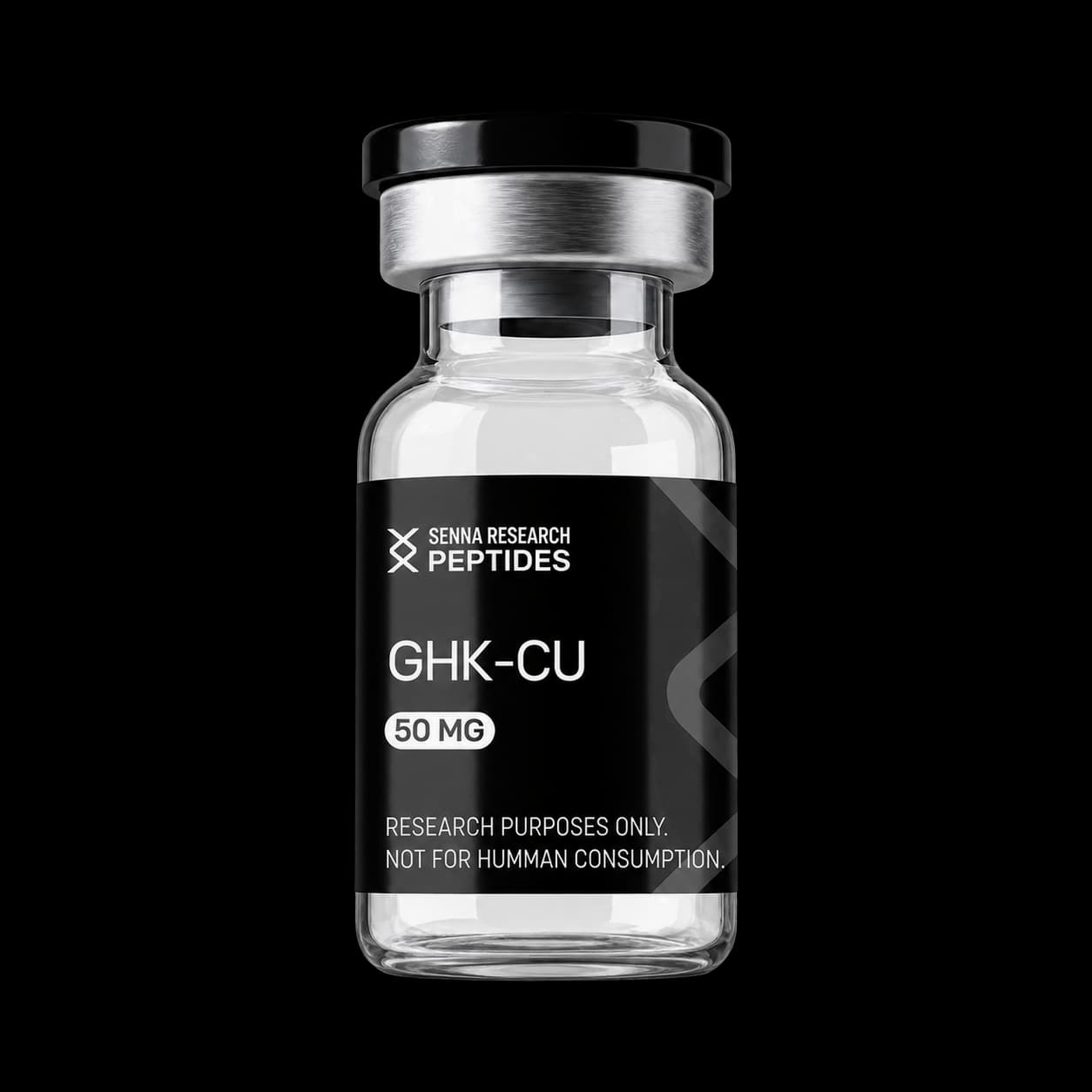
GHK-Cu modulates 4,000 genes
The count is not the finding. The direction is. In the GHK-Cu gene expression data, repair and antioxidant genes are upregulated, while inflammation and matrix-breakdown genes are downregulated. A count on its own means very little, because any compound could shift thousands of genes in a scattered pattern.
TB-500 is thymosin beta-4
TB-500 is a synthetic fragment tied to the actin-binding region of thymosin beta-4, not the full 43-amino-acid protein. Research on one does not automatically transfer to the other, so findings for thymosin beta-4 should not be read as findings for TB-500, or the reverse.
BPC-157 is a tendon peptide
The deepest research base for BPC-157 is in the gut: ulcer, inflammatory bowel disease and gut-barrier models. The tendon work came later and rests on thinner evidence. Describing it primarily as a tendon peptide inverts the weight of the literature.
99% pure means it is the right compound
Purity and identity are separate tests. HPLC purity measures how much of a sample is one compound; it does not confirm which compound that is. A sample can be 99% pure and still be the wrong sequence. Identity requires a separate method, such as mass spectrometry.
All peptides go in the fridge
Stability depends on the compound, the formulation, and whether the material is lyophilized or reconstituted. A single storage rule for every peptide ignores those differences. Validated storage data for the specific material is more reliable than a rule of thumb.