
Angiogenesis in tissue repair: why the proliferation phase stalls
Repaired tissue tops out at about 80% of its original strength, and the usual bottleneck is the arrival of new blood vessels during the proliferation phase.
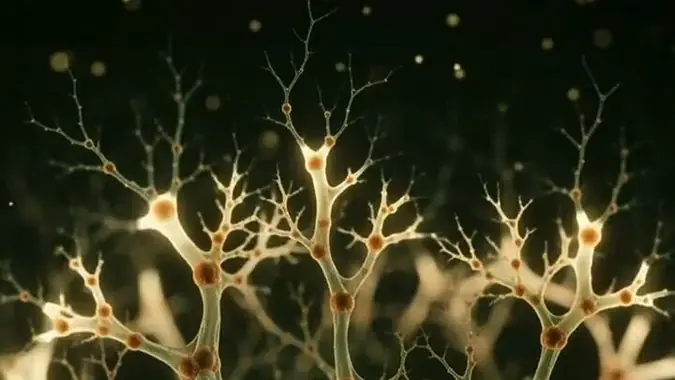
Scar tissue never returns to full strength. Even after remodeling is complete, repaired tissue reaches roughly 80% of its original tensile strength. The reason repair stalls is usually not the one people assume: it is less about the tissue itself and more about the supply lines that feed it.
The four phases of tissue repair
Tissue repair runs in four overlapping phases, each on a very different timescale:
- Hemostasis: minutes to hours.
- Inflammation: days.
- Proliferation: days to weeks.
- Remodeling: months, sometimes more than a year.
The length of the remodeling phase is easy to underestimate. Structural reorganization of new tissue continues long after the site appears closed, and it still ends below the original strength.
Why the proliferation phase is the bottleneck
The limiting step usually sits in the third phase. New tissue can only be built as fast as new blood vessels arrive to feed it, a process called angiogenesis. Without vessels, the site receives no oxygen, no nutrients and no repair signals.
Researchers see the same pattern in tendon and cartilage, both tissues with limited blood supply. The tissue does not refuse to repair; the supply chain arrives late.
Angiogenesis signaling in peptide research
That is why angiogenesis signaling, including VEGF pathways and the compounds that influence them, is one of the most active areas of preclinical peptide research. BPC-157 and thymosin beta-4 both appear in this literature as compounds studied for their relationship to vessel formation and repair signaling.
What the evidence is missing
The gap is controlled human post-surgical data. Nearly all of the work on these peptides and angiogenesis comes from animal models. The mechanistic case for studying vascular supply as the bottleneck is strong; whether peptide signaling changes that bottleneck outside animal models remains an open question.