
BPC-157 tendon research: blood supply, fibroblasts and the gaps
Tendons receive far less blood than muscle, which is why they repair slowly. Here is what the BPC-157 tendon studies measured, and what they leave open.
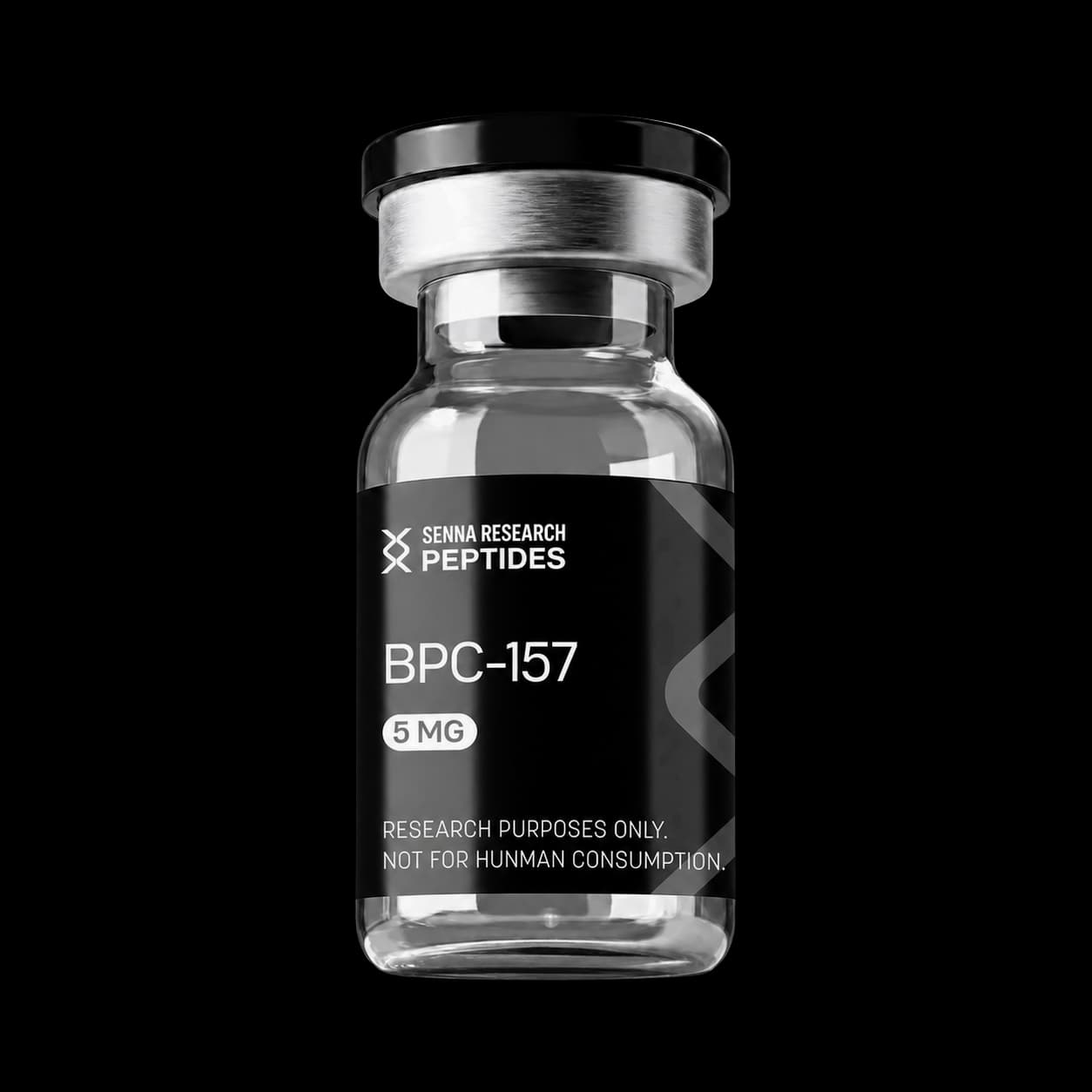
Tendons and ligaments receive a fraction of the blood supply that muscle does. With little local vascularity, the signals and nutrients that drive repair reach an injury site slowly, and connective tissue is known for repairing slowly as a result. That constraint is the reason BPC-157 keeps appearing in tendon research, and it frames what the studies set out to measure.
Why tendon vascularity matters
Repair in connective tissue depends on cells reaching the damaged area and on a blood supply that can carry growth signals to them. Tissue with minimal blood flow has both problems at once. Much of the research interest in tendon-active peptides is therefore about two questions: can a compound support new vessel formation near damaged tissue, and can it influence how fibroblasts, the cells that lay down tendon matrix, grow and move.
What the BPC-157 tendon studies measured
BPC-157, short for Body Protection Compound, is a synthetic peptide studied for angiogenic activity, meaning the formation of new blood vessels, around damaged connective tissue. Three papers are commonly cited in this area:
- Staresinic et al., Journal of Orthopaedic Research, 2003: a rat model of Achilles tendon transection.
- Chang et al., Journal of Applied Physiology, 2011: tendon fibroblast outgrowth and migration.
- Chang et al., Molecules, 2014 (PMC6271067): growth hormone receptor expression in tendon fibroblasts.
Together these describe a rodent tendon model and a set of cell studies on fibroblast behavior and receptor expression. They point to a local mechanism: vessel formation near the injury, plus changes in how tendon cells grow, migrate, and respond to growth hormone signaling.
How TB-500 is described differently
TB-500 is a fragment of thymosin beta-4. Its proposed mechanism centers on actin, a structural protein that cells need in order to migrate and change shape. Where BPC-157 is framed as a local, vascular signal, TB-500 is framed as acting more broadly, with research interest in cell migration, inflammation, and scar tissue adhesion.
A common way to describe the pairing is that one compound builds the roads, in the form of blood vessels, while the other moves the cells that do the rebuilding. That is a description of two proposed mechanisms, not a measured combined effect, and the cited papers study BPC-157 on its own.
The gap in the evidence
The cited tendon work is preclinical: a rat transection model and cultured tendon fibroblasts. Those models are useful for isolating mechanism, but they do not establish what happens in human connective tissue. Controlled human data on tendon outcomes is the missing piece, and any reading of this literature should keep the model system in view. When a summary skips the species and the cell type, it is skipping the most important detail in the paper.