
GHK-Cu skin biology research: collagen and remodeling
GHK-Cu is a naturally occurring copper-binding peptide that researchers have examined for roles in collagen synthesis, tissue remodeling and wound repair. The evidence is still early.
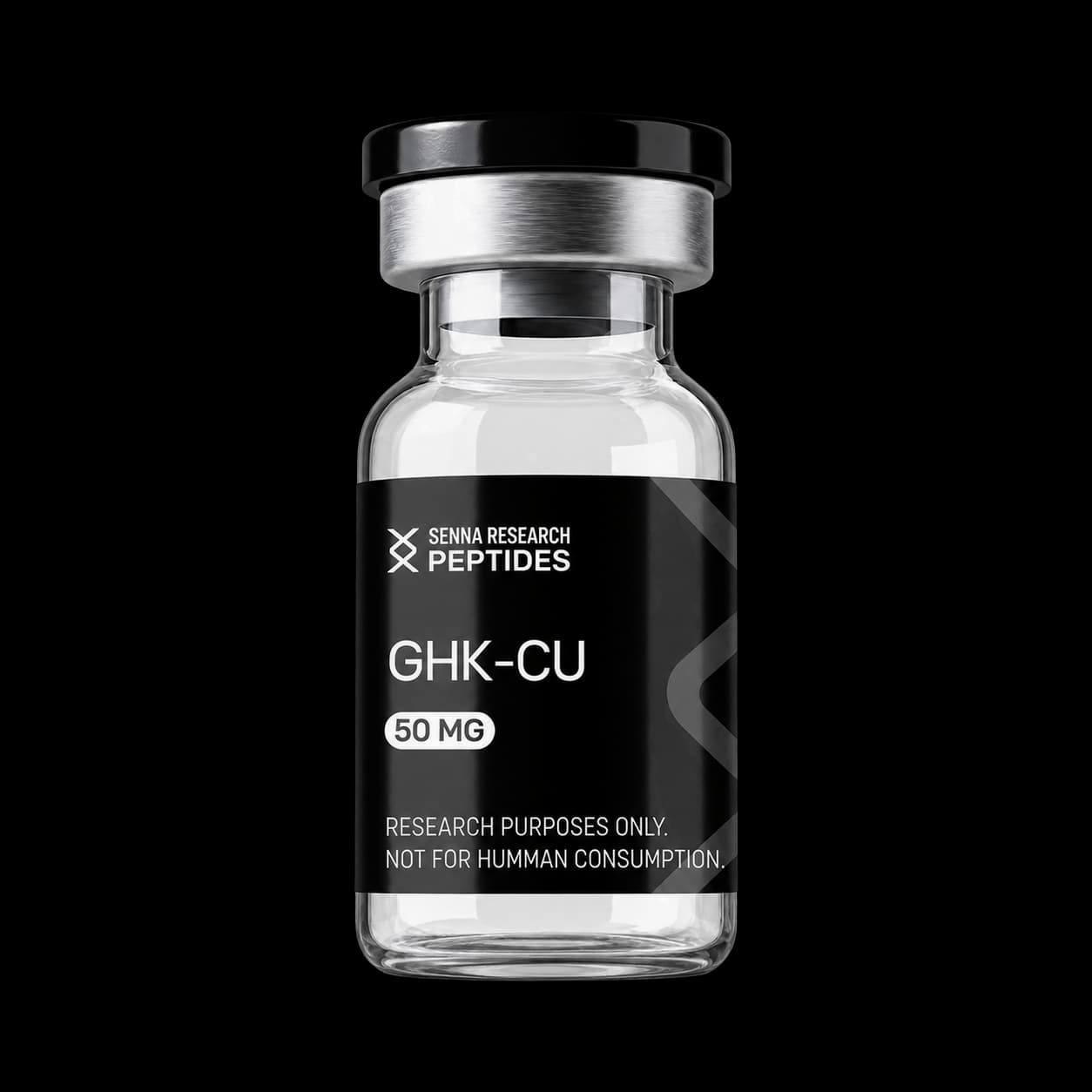
Among the peptides investigated in skin biology, GHK-Cu draws steady attention. It is a naturally occurring copper-binding peptide, and researchers have studied it for its potential role in collagen synthesis, tissue remodeling and wound repair. This article summarizes what that research addresses and where it stops.
A copper-binding peptide in the extracellular matrix literature
GHK-Cu is of interest because it sits at the intersection of three processes that skin biologists study closely: the synthesis of collagen, the remodeling of surrounding tissue, and the signaling that accompanies wound repair. In peptide terms, it is a short signal that researchers examine for how it may influence these pathways.
Why collagen and repair processes matter in aging research
As skin ages, collagen production and repair processes change. Those changes are associated with wrinkles, reduced elasticity and slower recovery after injury. This is the biological context in which GHK-Cu is studied: not as a single explanation for these changes, but as a molecule that may touch some of the pathways involved.
What the evidence shows, and what it does not
Preclinical research suggests GHK-Cu may influence some of the pathways described above. Small human studies have also explored its cosmetic potential. Both statements are modest by design. Preclinical work in cells and animal models cannot be assumed to carry over to people, and small studies limit how far their results can be generalized.
Several questions remain open:
- Long-term effects have not been well characterized.
- Different delivery methods have not been compared in depth.
- The literature is still thin on how consistently preclinical findings hold across study designs.
For laboratories, that means GHK-Cu is best understood as an active research subject with a plausible mechanistic rationale and an incomplete evidence base. Careful reading of study design, model system and sample size matters more than any summary claim.