
GHK-Cu and lysyl oxidase: why collagen needs copper
Lysyl oxidase turns loose collagen strands into a stable matrix, and it needs copper to do it. A look at the biochemistry behind one hypothesis about GHK-Cu.
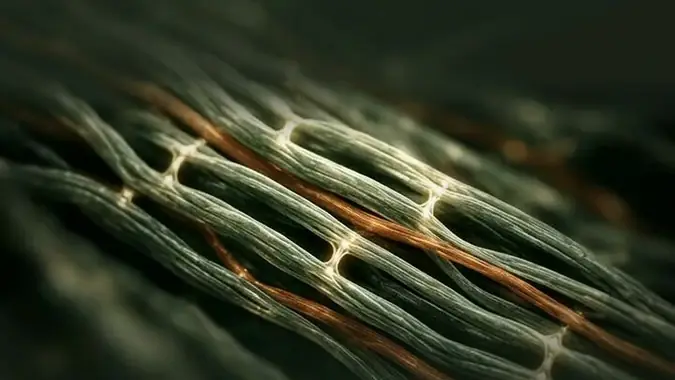
Collagen is often described as a structural protein, but structure is something the matrix has to be given. Loose strands become a stable, load-bearing network only after a chemical step, and that step depends on a metal that gets little attention. This article follows the biochemistry from the enzyme to the peptide that keeps appearing in collagen research.
Lysyl oxidase and the cross-linking step
Lysyl oxidase is the enzyme that cross-links collagen and elastin fibers. This cross-linking is what converts loose strands into a stable matrix able to bear load. The enzyme is copper-dependent. Without bioavailable copper, cross-linking does not proceed, whatever else is present.
That makes copper a structural requirement in the extracellular matrix, not a background nutrient. The fibers can be synthesized, but without the cross-linking step they do not hold their shape.
Two related pieces of basic biochemistry
Two other well-established facts frame the copper question.
- Vitamin C is a required cofactor for the enzymes that stabilize collagen before cross-linking. This is why scurvy breaks down connective tissue: the upstream step fails, so there is nothing stable to cross-link.
- Zinc and copper compete for absorption, and long-term high zinc intake is a documented cause of copper deficiency. Copper status depends on the balance between minerals as well as on supply.
Together these show that collagen stability sits at the intersection of several cofactors. Cross-linking needs a stabilized precursor and a copper-loaded enzyme.
Where GHK-Cu research sits
GHK is a tripeptide with an unusually high affinity for copper. One hypothesis in the literature is that part of the activity of GHK-Cu comes from carrying copper to the tissue where copper-dependent repair enzymes, lysyl oxidase among them, do their work.
This is one way to explain why GHK-Cu keeps appearing in collagen research when most peptides do not. A molecule that binds copper tightly and relates to a copper-dependent enzyme has a plausible reason to turn up in matrix studies.
What the hypothesis does not establish
Copper delivery is a hypothesis, not a settled mechanism. The biochemistry of lysyl oxidase is well characterized, but the link from GHK to that enzyme is a proposed explanation, and it should be read that way. Other mechanisms may contribute, and a copper-carrier model does not exclude them.
For laboratories working with copper peptides, the practical point is to account for copper availability as a variable in the experimental system. Cell culture media, mineral balance, and vitamin C status can all affect collagen endpoints, independent of the peptide under study.