
GHK-Cu and collagen research notes: copper, zinc and vitamin C
GHK-Cu is one of the few peptides in its niche with human trial data. Notes on that evidence and on the copper, zinc and vitamin C biochemistry around collagen.
· Roundup of 3 posts
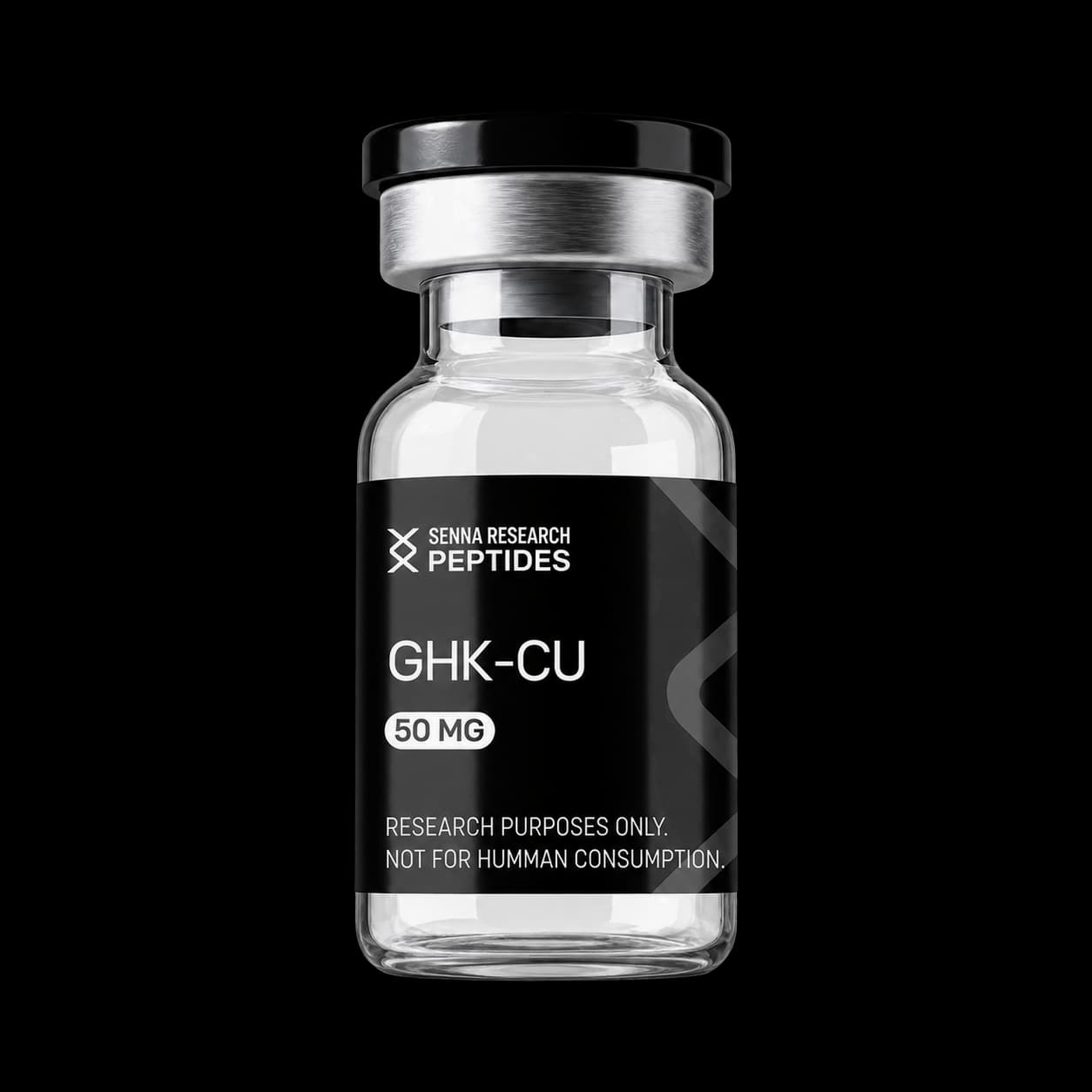
Collagen is built and stabilized by a chain of enzymes, cofactors and trace metals. These notes collect our short posts on GHK-Cu, the copper peptide with human trial data, and on the copper, zinc and vitamin C biochemistry that sits around collagen research.
GHK-Cu has human trial data
Most peptides discussed in this niche have no human trials at all. GHK-Cu is the exception: IRB-approved trials have measured increases in skin collagen.
The limit is in the delivery. Those trials studied skin formulations, and GHK-Cu crosses the skin barrier poorly unless a delivery system enhances penetration. The evidence is real but narrow.
Zinc and copper compete for absorption
Zinc and copper compete for the same absorption pathway in the gut, a piece of basic nutrition biochemistry that is often overlooked.
The competition is strong enough that long-term high zinc intake is a documented cause of copper deficiency, in some cases severe enough to produce neurological symptoms. For anyone reading copper peptide research, it is a reminder that copper status sits inside a wider mineral balance.
Vitamin C is a collagen cofactor
Vitamin C is usually discussed in terms of immune support, but it has a structural role too. It is a required cofactor for the enzymes that stabilize and cross-link collagen, and without it collagen cannot form a stable structure.
That is why scurvy breaks down connective tissue throughout the body, not only the gums. It also places vitamin C alongside copper in the basic chemistry that collagen research depends on.