01
Telomere Biology
Investigated in cell-culture models of telomere maintenance and replicative ageing.
For research use only — not for human consumption
Metabolic Research
In stock5mg/vial
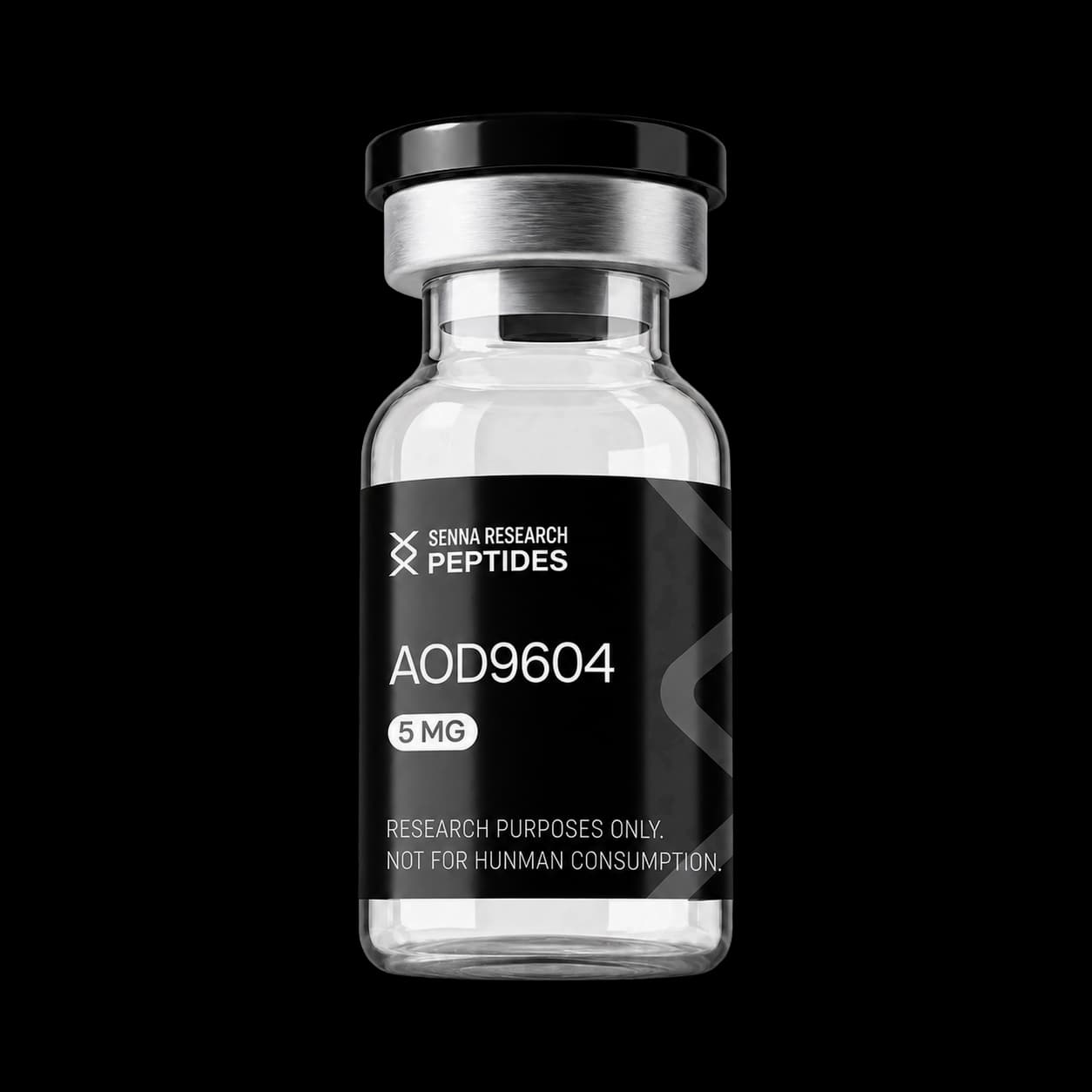
AOD9604 is a synthetic peptide fragment derived from human growth hormone. It is studied in preclinical models for its relationship with lipid metabolism signaling and structure-function research involving hormone fragments.
Professional pricing
Sign in or create a research account to see prices and add this material to your order. Access unlocks as soon as you create your account.
Sign in for pricingSpecifications
Lot & handling
Molecular
Analytics
When a lot certificate is on file we report identity, purity, and appearance. We publish analytical data only — never dosing information or outcome claims.
01
Chromatographic purity against a qualified reference standard.
02
Identity by observed versus theoretical molecular mass.
03
Residual moisture in lyophilized material.
04
Contaminant screening on raw material and finished lots.

Research background
Summary of the published literature this reference material is used in.
01
Investigated in cell-culture models of telomere maintenance and replicative ageing.
02
Studied for reported effects on transcriptional regulation in experimental systems.
03
Referenced in literature examining cellular senescence markers in vitro.
AOD9604 represents a defined sequence isolated from human growth hormone to examine structure-function relationships in controlled research settings [1]. By focusing on a fragment rather than the full hormone, researchers can explore signaling domains relevant to metabolic pathways with more targeted experimental design. This approach is commonly used to separate fragment behavior from broader endocrine effects in mechanistic studies.
Preclinical studies have explored AOD9604 in relation to pathways associated with lipolysis and fatty acid metabolism [2]. Researchers use controlled models to examine peptide-mediated signaling, enzymatic activity patterns, and adipocyte-related mechanisms. Findings from these studies contribute to the scientific conversation on how peptide fragments may influence metabolic pathway signaling.
AOD9604 is also referenced in peptide handling research, including solvent compatibility, solubility behavior, and degradation monitoring [1]. These considerations matter when researchers aim to keep experimental conditions consistent and minimize variability in assay outputs.
Key Specs
Referenced Citations
Mandatory research disclaimer
All materials on this site are sold as laboratory reagents for research use only. They are not drugs, foods, cosmetics, dietary supplements, or medical devices, and are not for human or veterinary use of any kind.
Senna Research makes no claims of safety or efficacy and provides no usage, dosing, or preparation guidance; we publish analytical data only.
These materials have not been evaluated or approved by the U.S. Food and Drug Administration for any use.