01
Telomere Biology
Investigated in cell-culture models of telomere maintenance and replicative ageing.
For research use only — not for human consumption
Bioregulators
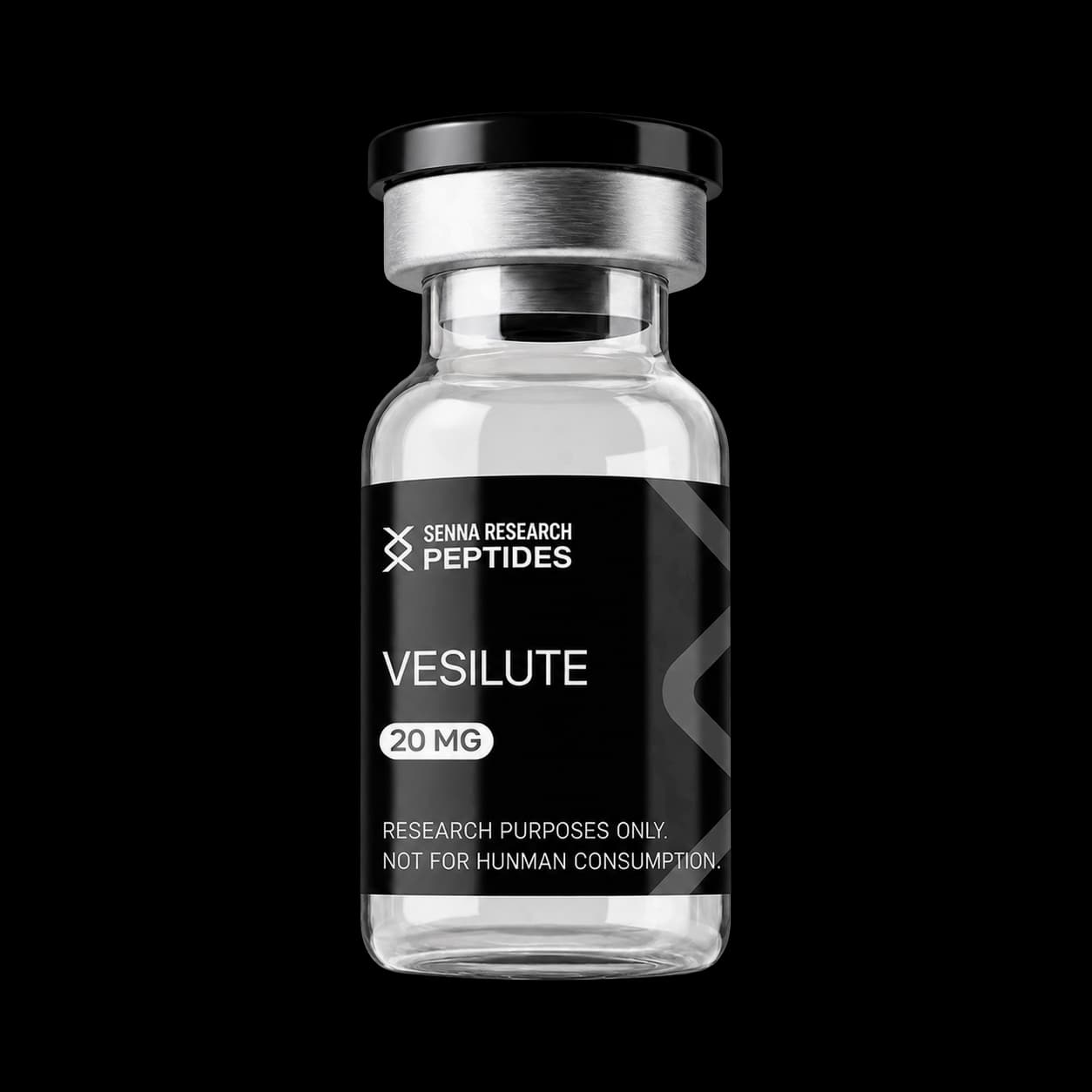
In stockVesilute is a synthetic peptide studied in urological research involving bladder tissue biology. Laboratory investigations examine its interaction with epithelial cells and signaling pathways associated with bladder tissue stability, cellular communication, and urological tissue structure.
Professional pricing
Sign in or create a research account to see prices and add this material to your order. Access unlocks as soon as you create your account.
Sign in for pricingSpecifications
Lot & handling
Molecular
Analytics
When a lot certificate is on file we report identity, purity, and appearance. We publish analytical data only — never dosing information or outcome claims.
01
Chromatographic purity against a qualified reference standard.
02
Identity by observed versus theoretical molecular mass.
03
Residual moisture in lyophilized material.
04
Contaminant screening on raw material and finished lots.
Research background
Summary of the published literature this reference material is used in.
01
Investigated in cell-culture models of telomere maintenance and replicative ageing.
02
Studied for reported effects on transcriptional regulation in experimental systems.
03
Referenced in literature examining cellular senescence markers in vitro.
The bladder lining consists primarily of epithelial cells that maintain barrier protection and regulate cellular signaling within urological tissues. Vesilute is studied in laboratory models involving these epithelial cells to better understand molecular communication pathways.
Researchers explore how peptide signaling compounds interact with epithelial cells and influence cellular processes related to tissue maintenance and structural integrity. Experimental studies may analyze how signaling molecules affect cellular communication and gene expression within bladder epithelial cells.
Urological tissues rely on complex molecular signaling networks to maintain structural organization and cellular function. Research involving Vesilute often focuses on examining these signaling pathways in controlled laboratory environments.
Scientists may investigate how peptides interact with cellular signaling mechanisms responsible for tissue organization, epithelial stability, and cellular adaptation. These studies contribute to a broader understanding of the biological systems that regulate bladder tissue structure.
Regeneration studies involving bladder tissues often examine how epithelial cells respond to cellular stress or structural disruption. Vesilute may be investigated in laboratory models that simulate these conditions.
Researchers analyze how peptide signaling interacts with pathways associated with tissue repair and epithelial maintenance. These experimental systems help scientists better understand the biological processes that influence bladder tissue stability and regeneration.
Mandatory research disclaimer
All materials on this site are sold as laboratory reagents for research use only. They are not drugs, foods, cosmetics, dietary supplements, or medical devices, and are not for human or veterinary use of any kind.
Senna Research makes no claims of safety or efficacy and provides no usage, dosing, or preparation guidance; we publish analytical data only.
These materials have not been evaluated or approved by the U.S. Food and Drug Administration for any use.